
What Is Embryology?
Embryology is the branch of biology and reproductive medicine that studies the formation, development and growth of embryos.
In human reproduction, embryology focuses on the earliest stages of life, from fertilization through preimplantation embryo development.
Embryology plays a central role in assisted reproductive technologies such as in vitro fertilization (IVF).
How Does Human Embryo Development Begin?
Human embryo development begins with fertilization, when:
- a sperm cell fuses with an oocyte
- genetic material combines
- a zygote is formed
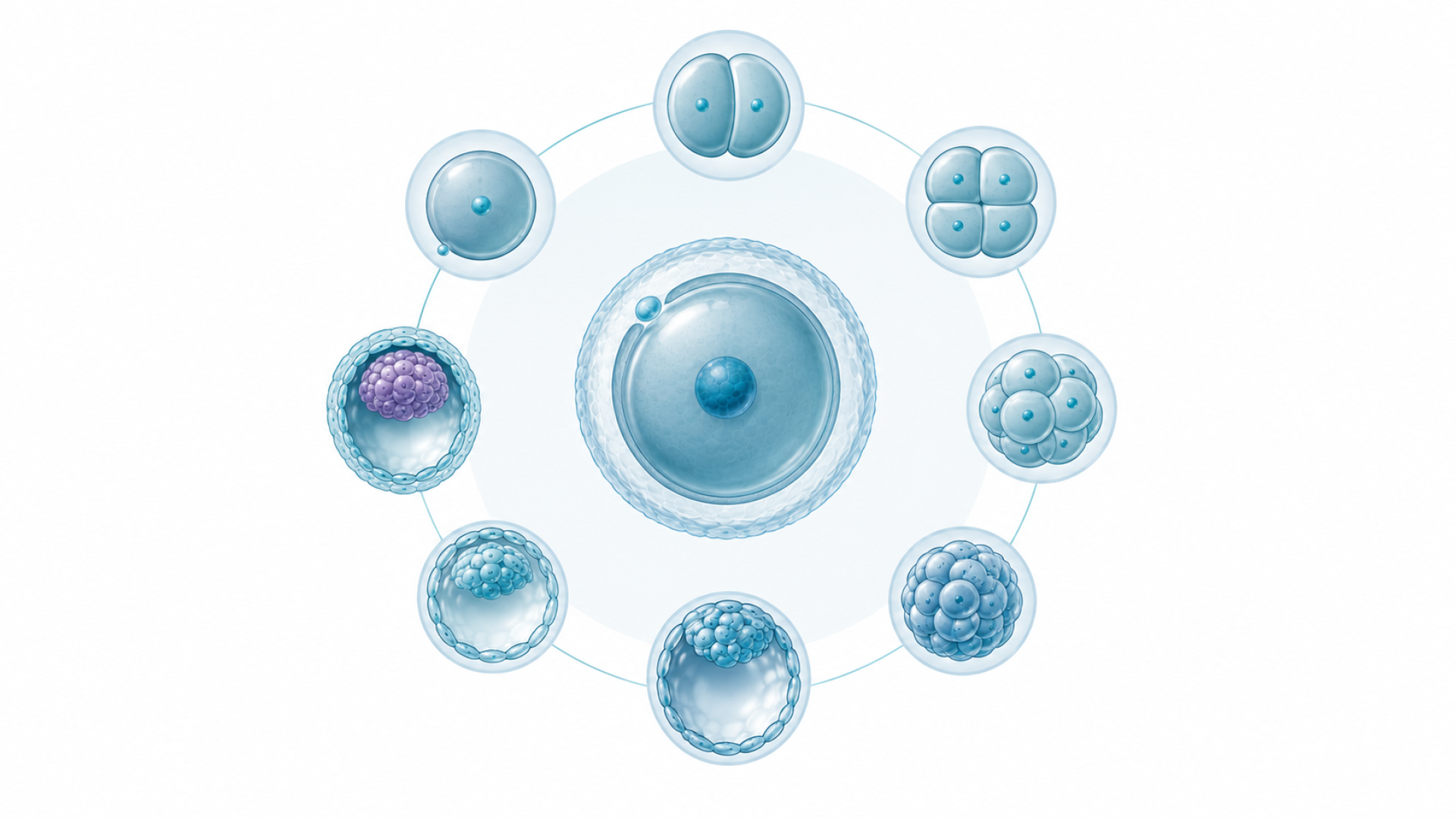
The embryo then undergoes multiple cell divisions while progressing through highly regulated developmental stages.
Main Stages of Early Embryo Development
Early embryonic development generally includes:
- zygote stage
- cleavage-stage embryo
- morula
- blastocyst
Each stage involves specific cellular and molecular changes required for successful implantation and pregnancy establishment.
What Happens During Embryo Development?
As the embryo develops:
- cells divide and specialize
- embryonic structures organize
- metabolic activity increases
- communication pathways emerge
Proper embryo development depends on precise genetic, cellular and environmental regulation.
Embryology in IVF
Embryology laboratories are essential components of IVF treatment.
Embryologists perform:
- oocyte assessment
- fertilization procedures
- embryo culture
- embryo monitoring
- embryo selection
- cryopreservation
Laboratory conditions are carefully controlled to support embryo viability and developmental competence.
Modern Technologies in Embryology
Contemporary embryology incorporates advanced technologies such as:
- time-lapse embryo imaging
- blastocyst culture
- embryo vitrification
- AI-assisted embryo assessment
- preimplantation genetic testing (PGT)
These technologies aim to improve embryo selection and reproductive outcomes.
Embryology and Implantation
Successful implantation requires synchronized communication between:
- the embryo
- the endometrium
- maternal immune and molecular systems
Embryology research continues to investigate the mechanisms involved in embryo competence and implantation biology.
Ethical and Scientific Considerations
Human embryology involves important scientific and ethical considerations related to:
- embryo research
- reproductive technologies
- genetic analysis
- fertility preservation
Clinical practice and research are regulated by ethical and legal frameworks that vary internationally.
Clinical Relevance
Embryology is one of the foundational disciplines of reproductive medicine.
Advances in embryology continue to improve:
- IVF success rates
- embryo viability assessment
- reproductive genetics
- fertility preservation
- precision reproductive medicine
Understanding embryology is essential for clinicians, embryologists and reproductive researchers.
