
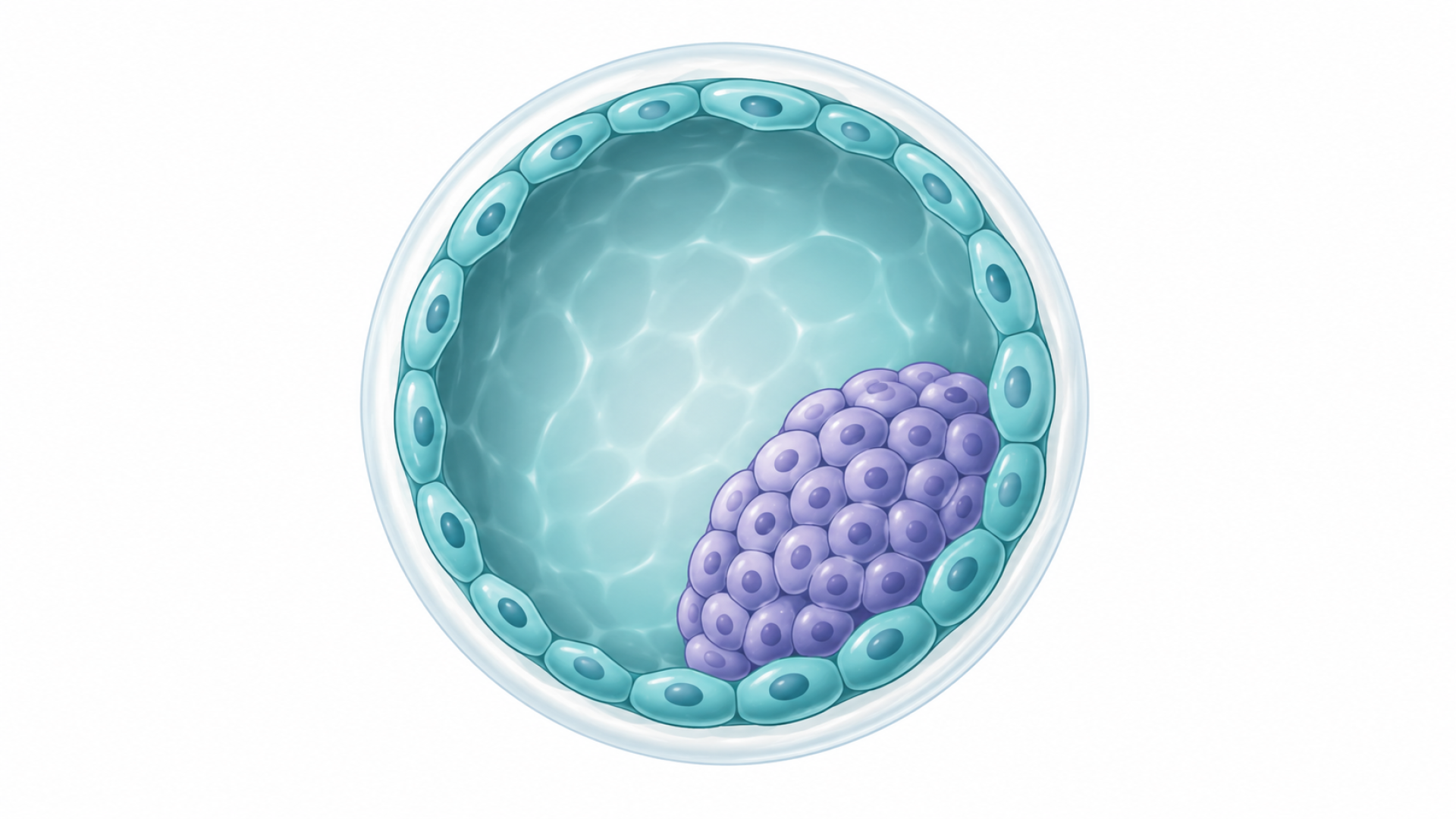
What Is a Blastocyst?
A blastocyst is an embryo that has reached an advanced stage of early development approximately five to six days after fertilization.
At this stage, the embryo contains:
- a fluid-filled cavity called the blastocoel
- an inner cell mass that will develop into the fetus
- an outer layer of cells called the trophectoderm that will contribute to placenta formation
The blastocyst stage represents a key milestone in human embryonic development.
How Does a Blastocyst Form?
After fertilization, the embryo undergoes multiple cell divisions while traveling through the fallopian tube toward the uterus.
Development progresses through several stages:
- zygote
- cleavage-stage embryo
- morula
- blastocyst
During blastocyst formation, cells begin to specialize and organize into distinct structures required for implantation and pregnancy development.
Why Is the Blastocyst Stage Important?
The blastocyst stage is critical because implantation normally occurs shortly after blastocyst formation.
A properly developed blastocyst has:
- greater developmental potential
- improved synchronization with the endometrium
- higher implantation probability compared with earlier-stage embryos
For this reason, blastocyst culture is commonly used in modern IVF laboratories.
Blastocyst Transfer in IVF
In assisted reproductive medicine, embryos may be cultured until the blastocyst stage before transfer into the uterus.
Blastocyst transfer offers several advantages:
- improved embryo selection
- better synchronization with the implantation window
- reduced likelihood of transferring non-viable embryos
- higher single embryo transfer success rates
However, not all embryos successfully reach the blastocyst stage in culture.
Blastocyst Grading
Embryologists commonly evaluate blastocysts using grading systems that assess:
- degree of expansion
- quality of the inner cell mass
- quality of the trophectoderm
Blastocyst grading helps estimate developmental potential but does not guarantee implantation or pregnancy success.
Blastocyst and Implantation
Before implantation, the blastocyst must hatch from its surrounding zona pellucida and establish communication with the endometrium.
Successful implantation requires:
- embryo viability
- endometrial receptivity
- molecular synchronization between embryo and uterus
This interaction represents one of the most complex processes in human reproduction.
Clinical Relevance
Blastocyst development is a central focus of reproductive medicine and embryology research.
Current advances aim to improve:
- embryo culture conditions
- embryo selection technologies
- time-lapse embryo assessment
- implantation prediction
- IVF success rates
Understanding blastocyst biology is essential for optimizing assisted reproductive treatments and improving pregnancy outcomes.
