
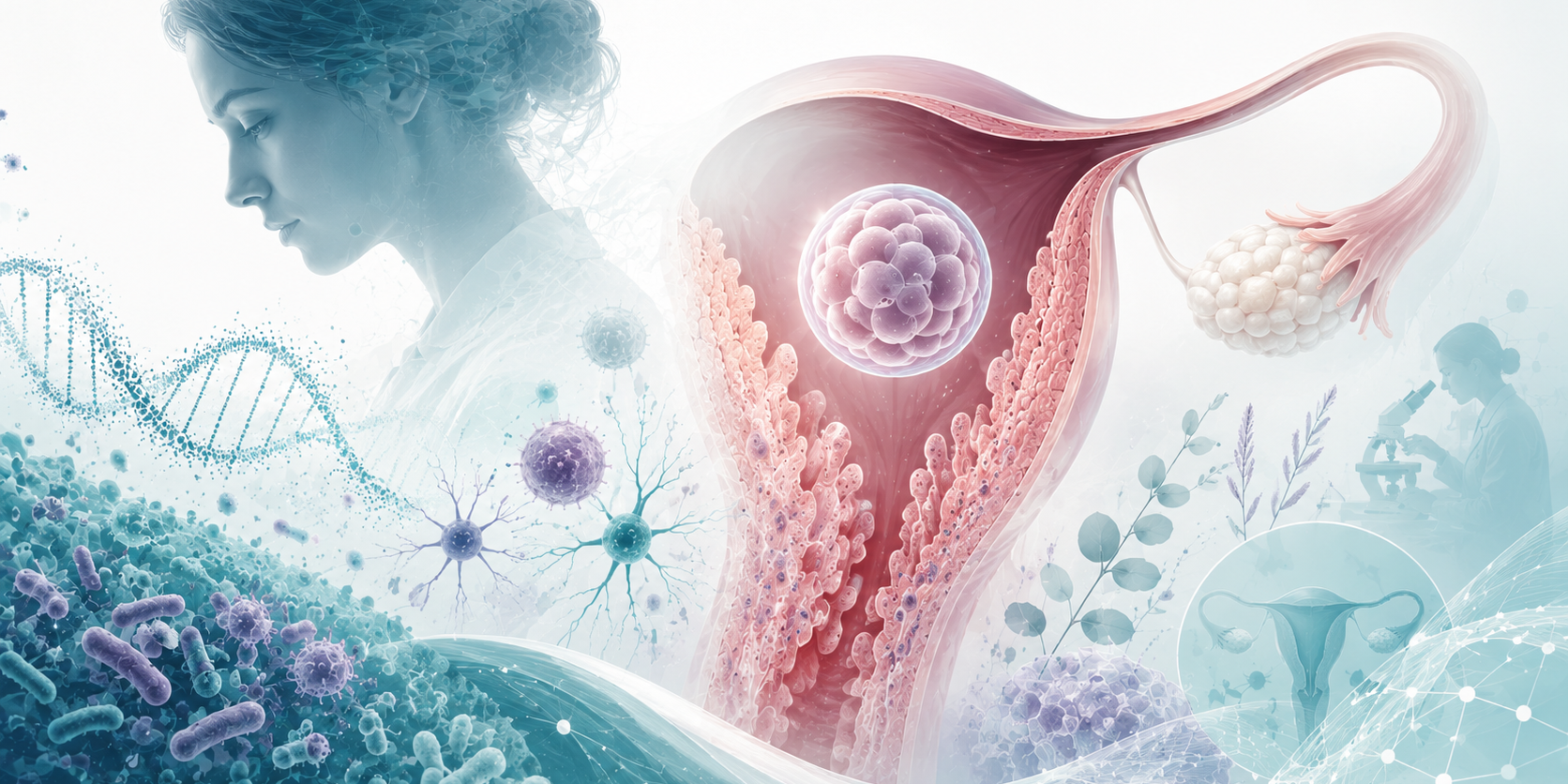
What causes implantation failure?
One of the most common questions in reproductive medicine is: what causes implantation failure? Implantation is a complex biological process in which a competent embryo interacts with a receptive endometrium within a very precise time frame. When this process does not result in pregnancy, the cause is not always easy to identify.
Implantation failure may be related to embryonic factors, endometrial receptivity, uterine anatomy, hormonal environment, inflammation, microbiome alterations or other systemic conditions. In many cases, more than one factor may be involved. Current recommendations also emphasize that recurrent implantation failure should be assessed carefully and individually, avoiding unnecessary tests or treatments that lack strong evidence [1].
Understanding the possible causes of implantation failure is essential for clinicians, embryologists and reproductive medicine specialists who aim to improve assisted reproduction outcomes.
What is implantation failure?
Implantation failure occurs when an embryo does not successfully attach to the endometrium and initiate pregnancy. In assisted reproduction, this usually becomes clinically relevant after embryo transfer, especially when good-quality embryos have been transferred and pregnancy has not occurred.
However, implantation is not guaranteed in every cycle. Even with apparently good embryos and adequate endometrial preparation, implantation depends on a synchronized interaction between the embryo, the endometrium and the maternal environment. For this reason, a single failed embryo transfer does not necessarily indicate a pathological condition.
The term recurrent implantation failure is usually used when implantation does not occur after several embryo transfers. The definition varies across studies and clinical settings, but recent ESHRE recommendations highlight the need to consider the number of embryos transferred, embryo quality, maternal age and prognosis before labeling a case as recurrent implantation failure [1].
Embryonic factors
Embryo quality is one of the most important determinants of implantation. A morphologically normal embryo may still carry chromosomal or molecular abnormalities that prevent implantation or early development.
Chromosomal abnormalities, especially aneuploidies, increase with maternal age and are a major cause of failed implantation and early pregnancy loss. Embryo competence depends not only on morphology, but also on chromosomal status, developmental potential, mitochondrial activity and the ability to communicate with the endometrium.
In IVF, embryo assessment traditionally relies on morphology and developmental timing. More advanced approaches, such as preimplantation genetic testing for aneuploidy, may help identify euploid embryos in selected cases, although its use must be individualized according to patient profile, age, reproductive history and clinical indication.
Endometrial receptivity
The endometrium is not a passive tissue. It undergoes cyclic changes that prepare it for embryo implantation during a limited period known as the window of implantation.
If the endometrium is not receptive at the time of embryo transfer, implantation may fail even when the embryo is viable. Endometrial receptivity depends on hormonal regulation, cellular differentiation, immune signaling, vascular remodeling and molecular communication between maternal tissue and the embryo.
Alterations in endometrial receptivity have been proposed as a possible contributor to recurrent implantation failure. However, the clinical value of some receptivity tests remains debated, and professional guidelines recommend caution when using diagnostic or therapeutic approaches without robust evidence [1].
Uterine anatomical factors
Uterine abnormalities can interfere with implantation by altering the shape, structure or local environment of the uterine cavity. These factors may reduce the probability that an embryo implants correctly or may increase the risk of early pregnancy loss.
Relevant uterine factors include:
- Endometrial polyps.
- Submucosal fibroids.
- Intrauterine adhesions.
- Uterine septum or congenital uterine anomalies.
- Hydrosalpinx, which may affect the uterine environment through inflammatory fluid reflux.
Recent evidence and guideline discussions recognize intrauterine adhesions, hydrosalpinx, uterine malformations, submucosal myomas and endometrial polyps as potential factors associated with implantation failure, although their clinical relevance depends on size, location and individual context [2].
For this reason, imaging techniques such as ultrasound, saline infusion sonography or hysteroscopy may be considered when uterine pathology is suspected.
Chronic endometritis and inflammation
Chronic endometritis is a persistent inflammation of the endometrial lining, often characterized by the presence of plasma cells. It may be asymptomatic, which makes diagnosis challenging.
Several studies have associated chronic endometritis with poor reproductive outcomes, including recurrent implantation failure. The proposed mechanisms include local inflammation, altered immune response, changes in endometrial receptivity and disruption of the uterine microenvironment [3].
Diagnosis usually requires endometrial sampling and histological or immunohistochemical assessment. Treatment depends on the underlying cause and clinical context, but antibiotics may be considered when infection-related chronic endometritis is confirmed.
The role of the endometrial microbiome
The endometrial microbiome has become an emerging area of interest in reproductive medicine. For many years, the uterus was considered a sterile environment. Current research suggests that the endometrium may contain a low-biomass microbial community, although its composition, stability and clinical significance are still under investigation.
A growing body of research has identified associations between endometrial microbial profiles and reproductive outcomes, including embryo implantation and recurrent implantation failure. Some studies have reported more favorable outcomes in patients with Lactobacillus-enriched endometrial profiles, while certain other microbial patterns have been associated with unsuccessful implantation. Although findings vary across studies, this evidence supports continued investigation into the biological and potential clinical relevance of the endometrial microbiome [4].
This means that microbiome testing may be promising, but its interpretation should remain cautious. More high-quality studies are needed before microbiome-based interventions can be routinely recommended for all patients with implantation failure.
Understanding the reproductive microbiome: from research to clinical interpretation
As research into the reproductive microbiome advances, healthcare professionals need to understand not only the associations between microbial profiles and reproductive outcomes, but also the methodologies, limitations and clinical evidence behind microbiome testing.
GenHERate IQ’s online course, Reproductive Microbiome: From Science to Personalized Practice, explores reproductive microbial communities, sequencing technologies, microbiome analysis and emerging clinical applications, helping professionals develop the scientific knowledge needed to critically evaluate and interpret these tests.
Hormonal and metabolic factors
Hormonal balance is essential for endometrial preparation. Implantation may be affected by inadequate progesterone exposure, altered luteal phase support, thyroid dysfunction, hyperprolactinemia or metabolic conditions.
In assisted reproduction, progesterone is particularly important because it drives secretory transformation of the endometrium and helps define the timing of receptivity. Inadequate progesterone levels or mistimed exposure may affect synchronization between embryo and endometrium.
Other systemic factors, such as body mass index, insulin resistance, polycystic ovary syndrome or thyroid disease, may also influence reproductive outcomes. Recent research has identified variables such as AMH, chronic endometritis, intrauterine adhesions and BMI among factors associated with recurrent implantation failure in specific populations [2].
Endometriosis and implantation
Endometriosis may affect implantation through several mechanisms, including inflammation, altered immune signaling, oxidative stress, impaired endometrial receptivity and changes in ovarian function.
The relationship between endometriosis and implantation failure is complex. Some patients with endometriosis achieve pregnancy without difficulty, while others experience reduced implantation rates or recurrent pregnancy loss. Disease severity, ovarian reserve, embryo quality and uterine environment all influence clinical outcomes.
Because endometriosis is a heterogeneous disease, management should be individualized. The presence of endometriosis does not automatically explain implantation failure, but it should be considered within the broader reproductive history.
Immunological and thrombophilic factors
The maternal immune system plays an important role in implantation. Successful pregnancy requires a balanced immune response that allows embryo tolerance while maintaining tissue defense.
Some immunological alterations have been proposed as contributors to recurrent implantation failure, including changes in natural killer cells, cytokine profiles or autoimmune conditions. Thrombophilic factors have also been studied in relation to implantation and pregnancy loss.
However, many immune tests and empirical treatments remain controversial. ESHRE recommendations emphasize that several investigations and interventions frequently used in recurrent implantation failure are not recommended for routine use until their efficacy and safety are supported by stronger evidence [1].
This is especially important because unnecessary testing may increase patient anxiety, cost and exposure to treatments without proven benefit.
Male factor and sperm contribution
Although implantation is often discussed from the perspective of the embryo and endometrium, sperm quality can also influence embryo development.
Severe sperm DNA fragmentation, oxidative stress or other sperm-related alterations may affect fertilization, embryo development and potentially implantation. In some cases, male factor evaluation may be relevant, particularly when repeated poor embryo development or unexplained implantation failure occurs.
A complete assessment should therefore include both partners when clinically indicated.
Why implantation failure is often multifactorial
Implantation failure is rarely explained by a single cause. More often, it results from the interaction of several biological variables.
A patient may have a euploid embryo but impaired endometrial receptivity. Another may have a normal uterine cavity but chronic inflammation. In other cases, no clear cause is identified despite appropriate evaluation.
This is why implantation failure should not be approached as a single diagnosis, but as a clinical situation that requires structured assessment. The goal is to identify modifiable factors while avoiding overdiagnosis and unsupported interventions.
How implantation failure is evaluated
Evaluation depends on the patient’s age, embryo history, number of transfers, embryo quality, ovarian reserve, uterine findings and previous reproductive outcomes.
A structured assessment may include:
- Review of embryo quality and developmental history.
- Evaluation of ovarian reserve and maternal age.
- Assessment of uterine cavity and endometrial thickness.
- Screening for chronic endometritis when clinically indicated.
- Review of endocrine and metabolic factors.
- Consideration of sperm quality and male factor.
- Analysis of previous IVF protocols and embryo transfer conditions.
The most appropriate strategy should be individualized. In reproductive medicine, more testing does not always mean better care. The key is to select investigations that are clinically justified and supported by evidence.
Can implantation failure be prevented?
Not all implantation failure can be prevented. Some failures occur because of embryo chromosomal abnormalities or biological events that cannot be predicted in advance.
However, reproductive outcomes may improve when modifiable factors are identified and addressed. This may include optimizing embryo selection, treating uterine pathology, correcting endocrine disorders, managing chronic endometritis, improving metabolic health or adjusting embryo transfer protocols.
In clinical practice, the most effective approach is usually multidisciplinary, combining reproductive endocrinology, embryology, gynecology, molecular diagnostics and evidence-based counseling.
Key takeaways
Implantation failure can be caused by embryonic, endometrial, uterine, hormonal, inflammatory, microbiome-related, immunological or male factors. In many cases, several mechanisms may coexist.
The most important point is that implantation failure should be assessed with scientific rigor. Recurrent implantation failure requires careful definition, individualized evaluation and evidence-based management.
For professionals in reproductive medicine, understanding what causes implantation failure is essential to improve patient counseling, optimize clinical decisions and advance toward more precise reproductive care.
References
1. ESHRE Working Group on Recurrent Implantation Failure. ESHRE good practice recommendations on recurrent implantation failure. Human Reproduction Open. 2023.
2. Risk factors for recurrent implantation failure as defined by the ESHRE recommended criteria. Human Reproduction. 2025.
3. Zhang H, Zou H, Zhang C, Zhang S. Chronic endometritis and the endometrial microbiota: implications for reproductive success in patients with recurrent implantation failure. Annals of Clinical Microbiology and Antimicrobials. 2024.
4. Recent reviews on the role of the endometrial and uterine microbiome in embryo implantation and recurrent implantation failure.
